
A strong benefits package doesn’t come from piling on coverage and hoping employees appreciate it. It comes from structure. And most employers don’t realize they’re building theirs in the wrong order until they’ve already paid for it.
Think about constructing a building. You don’t start with the roof. You don’t start with the windows. You pour the foundation first, then build the walls, then put the roof on top. Benefits work the same way. When you skip steps or stack coverage without a plan, the whole thing ends up collapsing.
A good employee benefits consultant helps you build in the right sequence. Here’s what that looks like:
Step 1: Protect Income and Family Stability First
The foundation of any solid benefits package is protection against the things that can completely derail an employee’s life. Not a cold. Not a dentist appointment. The serious stuff.
That means disability insurance, or as we call it, paycheck protection insurance, along with life insurance. These benefits don’t get the attention that health insurance does, but they’re what employees actually need when life goes sideways.
If someone can’t work for a stretch of time or dies unexpectedly, these coverages matter immediately and personally. Everything else in the package becomes secondary when income or family stability is on the line.
A strong employee benefits consultant starts here, not at the premium comparison sheet. They’ll help you look at waiting periods, coverage amounts, and participation structure so the protection is meaningful without inflating cost. When this base layer is solid, every decision you make on top of it has something real to stand on.
Step 2: Add the Everyday Benefits Employees Actually Use
Once the foundation is in place, you build the walls: the benefits employees interact with regularly and recognize the value of quickly.
Dental and vision are the clearest examples. They’re easier to understand than most medical plans, and employees use them for routine care. That’s stuff like dental cleanings, eye exams, and glasses. The basics. When people can point to benefits they actively use, the whole package feels real. It has substance. That matters for morale, and it matters for retention.
There’s also a health case for prioritizing these benefits. Dental and vision issues frequently detect early signs of broader health concerns. A good consultant integrates them cleanly and cost-effectively because they know preventive care upstream is almost always cheaper than reactive care downstream.
Don’t underestimate these benefits because they feel routine. Employees notice them, use them, and talk about them.
Step 3: Choose Medical Coverage With Your Eyes Open
This is where the roof goes on, and where costs can swing hardest if you’re not paying attention.
A good consultant won’t just slide you a few rate sheets and ask which premium looks best. They’ll help you understand how the plan works, what employees are likely to experience using it, and whether the funding model fits your organization’s size, goals, and risk tolerance. For some employers, a traditional fully-insured plan is the right call. For others, level-funded or self-funded options offer better long-term value and stronger visibility into actual claims activity.
Premium alone isn’t the decision. Deductibles, network access, out-of-pocket exposure, and renewal volatility all shape the real cost of a plan for both you and your team. A consultant worth working with slows down at this step and explains the tradeoffs clearly, so you’re choosing something that supports the business long-term, not just something that felt affordable on signing day.
Ask yourself, or your broker, these questions:
- How much are employees actually carrying when they use the plan?
- Does the network cover the providers and areas where your people seek care?
- Will this funding model hold up a year from now when you know more about your claims?
Those are the concerns you need to address. If you don’t know the answers or understand what they mean for your plan, you aren’t ready to sign on the dotted line. And if your consultant isn’t helping you work through all this, they aren’t doing their job.
Step 4: Make Communication Part of the Plan Design
Here’s where most employers leave money on the table.
They spend real time choosing the right benefits, then rush through communication and assume employees will figure it out.
They won’t. Or at least, not the way you’re hoping.
Employees who don’t understand their benefits don’t use them well. They use the Emergency Room when urgent care would’ve cost a fraction of what the ER charges. They skip preventive visits that would cost them nothing. They don’t touch their Health Savings Account (HSA) because no one explained it clearly. That confusion translates directly into wasted spend, avoidable claims, and frustrated employees who have solid coverage they never fully use.
Communication isn’t a nice-to-have that happens after plan design wraps up. It’s part of the plan design. Your consultant should help you build plain-language materials, simple enrollment support, and ongoing resources that don’t disappear when open enrollment ends.
When employees understand what they have and how to use it, they make better decisions. Better decisions mean better health outcomes and lower costs across the board.
Step 5: Work With a Consultant Who Stays Engaged
The final step isn’t a one-time action. It’s a standard you hold your consultant to all year.
A strong consultant treats your benefits like an ongoing performance issue, not a box to check at renewal. They help you track what’s working, where costs are drifting, and what needs adjustment before a problem compounds. They bring transparency to the process. That means clear reporting, honest explanations, and the willingness to push back on weak carrier offers or lazy assumptions.
If a strategy is supposed to control costs, improve engagement, or support retention, your consultant should be able to show you what success looks like and tell you whether you’re getting there. That accountability is how benefits stop being a burden and instead become the business tool they’re supposed to be.
An independent consultant who isn’t tied to a single carrier gives advice that isn’t filtered through commission incentives. It’s built around your workforce and your goals. They find you the right coverage, not the coverage that lines their pocket the most.
Build It in the Right Order, and It Holds
The reason this sequence works is the same reason a foundation-first building doesn’t fall over. Each layer supports the one above it.
Paycheck protection and life insurance cover employees when nothing else matters. Dental and vision create visible, everyday value that employees recognize quickly. Carefully chosen medical coverage manages your biggest cost variable. Communication turns everything into something employees actually use and use efficiently. And an accountable consultant keeps the whole system improving instead of quietly degrading.
When employers skip steps, going straight to premium shopping and filling in the rest later, they build packages that look complete but lean in the wrong direction. Coverage without communication. Protection without education. Decisions without context.
The Benefit Doctor’s approach to benefits design is built around exactly this sequence: foundation, walls, roof, and the year-round support that keeps everything standing. If your current strategy feels more reactive than structured, let’s talk about where to start.
Video

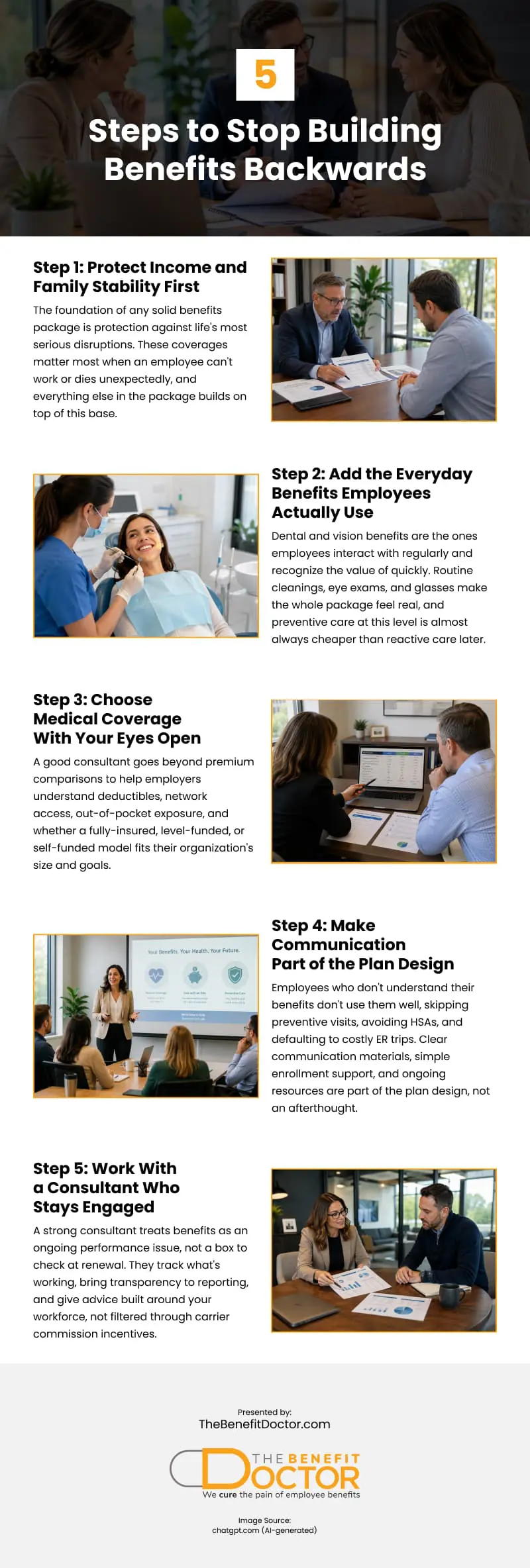
Infographic
Building a strong employee benefits package isn’t about piling on coverage and hoping for the best; it’s about building in the right sequence. Check out the steps to stop building benefits backwards in this infographic.