Most people think employer vision insurance is the “glasses benefit.” Frames, contacts, maybe a quick eye exam once a year. That’s the surface-level story.
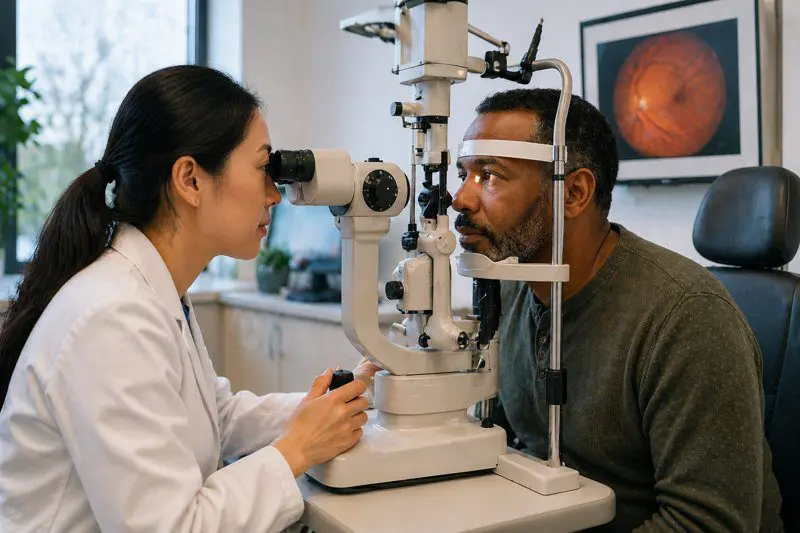
The real value is happening behind the scenes. An employee sits down for a routine exam because their glasses feel off. The optometrist takes a look at the retina and spots something unusual in the blood vessels. That tiny clue turns into a follow-up test, which leads to an early diagnosis that could have taken years to catch otherwise.
That’s the hidden power of vision coverage. It turns a simple checkup into a preventive health tool. Early detection leads to earlier treatment, fewer complications, and fewer costly surprises down the road. From a business perspective, that means a healthier team and fewer disruptions caused by preventable health crises.
Your Eyes Are a Front-Row Seat to the Body’s Health
During an eye exam, providers can see signs of inflammation, circulation problems, and subtle changes in the retina or optic nerve. These clues often appear long before someone actually feels sick.
That’s why regular eye exams deserve a seat at the same table as other important medical employee benefits. When employees have access to affordable annual exams, they are far more likely to get screened consistently. Those screenings can uncover problems early, when treatment is easier and recovery is faster.
Think of it as preventive maintenance for the human body. You don’t wait for your car engine to explode before checking the oil. The same logic applies to health.
Vision Care Can Flag Diabetes Earlier
Diabetes rarely shows up with fireworks. It creeps in quietly. Blood sugar climbs, symptoms stay subtle, and employees keep powering through their day without realizing anything is wrong. A routine eye exam can quickly change that story.
Optometrists often spot early warning signs like diabetic retinopathy or tiny blood vessel changes in the retina. Those clues can point to blood sugar problems long before an employee gets an official diagnosis. That early signal matters because catching diabetes sooner dramatically improves outcomes.
When an optometrist flags something unusual, the next step is simple. The employee follows up with their primary care provider, gets tested, and starts treatment if needed. From an employer’s perspective, that early intervention helps avoid the kind of complications that drive expensive claims and long medical absences.
Picture a common situation. An employee schedules an eye exam because their screen time is causing headaches and blurry vision. The optometrist looks closer and notices vascular changes that suggest a metabolic issue. A quick referral later, the employee gets tested, begins treatment, and sidesteps a much bigger health crisis down the road. That’s preventive care doing exactly what it should do.
Blood Pressure And Cholesterol Leave Clues In The Eyes
Your eye offers something unique in medicine. It’s one of the only places where doctors can observe blood vessels directly without invasive testing.
That visibility makes routine eye exams surprisingly useful for spotting circulation problems. High blood pressure and elevated cholesterol often leave visible traces in the retina, including narrowed arteries, swelling, or small areas of bleeding.
Most employees will never suspect their blood pressure is rising. Many feel perfectly fine until the condition becomes serious. An eye exam can provide the early warning that sends someone to their physician before the issue escalates.
That small intervention can prevent major health events like strokes or heart attacks. For employers, preventing those outcomes protects both your employees and your health plan from serious strain.
Glaucoma Screening Protects Vision And Work Performance
Glaucoma is one of the most dangerous eye conditions precisely because it develops quietly. In many cases, people don’t notice symptoms until vision damage has already occurred.
A comprehensive eye exam can detect glaucoma early by measuring eye pressure and examining the optic nerve. When doctors catch it early, treatment can slow or prevent vision loss. That single step can preserve someone’s ability to drive, read, and work comfortably.
Think about what that means for your workforce. Clear vision supports nearly every job function, especially in a digital workplace where screens dominate the day. When employees maintain healthy eyesight, they stay productive and confident in their work.
Protected vision also reduces the likelihood of disability claims tied to preventable vision loss. From both a human and financial standpoint, early glaucoma screening is a smart move for any employer that wants a stable and healthy workforce.
Vision Changes Can Reveal Neurological Concerns
The eyes connect directly to the brain through the optic nerve, so certain neurological issues can show up during an eye exam.
Optometrists sometimes detect abnormal eye movement, optic nerve swelling, or unexplained vision changes that suggest a neurological concern. These findings don’t mean the provider is diagnosing a complex condition on the spot. What they are doing is identifying signals that deserve further evaluation.
That early signal can make a huge difference for employees navigating confusing symptoms. Instead of spending months wondering why something feels off, they receive a clear recommendation to pursue additional testing.
Faster evaluation leads to faster answers. And faster answers lead to earlier treatment, which improves outcomes and reduces disruption for both employees and employers.
Screen Fatigue Is A Productivity Problem Hiding In Plain Sight
Eye strain might sound like a minor annoyance, but anyone who spends eight hours staring at a monitor knows how quickly it can drain energy and focus.
Headaches, dry eyes, blurry vision, and neck strain all chip away at productivity throughout the day. Employees push through it because they assume it’s normal. In reality, many of those problems can be solved with a simple prescription update or targeted eye care advice.
This is another way vision insurance delivers value. When employees have easy access to eye exams, they are far more likely to address vision issues before those problems start hurting performance.
Clear vision supports better concentration, fewer mistakes, and less end-of-day fatigue. It’s the difference between squinting through spreadsheets and working all afternoon comfortably.
Early Detection Protects Your Health Plan Budget
Employers often feel the financial consequences of health issues long after the warning signs first appear. Chronic conditions that go unmanaged tend to spiral into complex care plans, specialist visits, and expensive medical claims.
Preventive vision care helps interrupt that cycle. When employees attend routine exams, doctors have more opportunities to detect problems early. Earlier detection usually means simpler treatment and far fewer complications.
This dynamic is one reason smart employers include vision coverage as part of a comprehensive employee benefits package. Pairing vision coverage with health insurance provides access to preventive care across multiple entry points in the health system.
Employees who catch issues early also tend to stay more engaged with their health care overall. They follow treatment plans, attend follow-up visits, and avoid the kind of medical crises that destabilize a benefits plan.
No benefits strategy can eliminate every high-cost claim. But early detection can dramatically reduce the number of preventable ones.
The Bottom Line For Employers
Vision care is one of the most quietly powerful tools in workplace health. Routine eye exams can reveal early signs of diabetes, hypertension, cholesterol issues, glaucoma, and even neurological concerns. All that comes from a relatively low-cost addition to your employee benefits plan.
For employers, the value shows up in healthier teams, fewer costly medical events, and a benefits strategy that truly works the way it was designed.
A simple eye exam might be the first step toward preventing a much bigger health problem. And that’s a win for everyone involved.
Video

Infographic
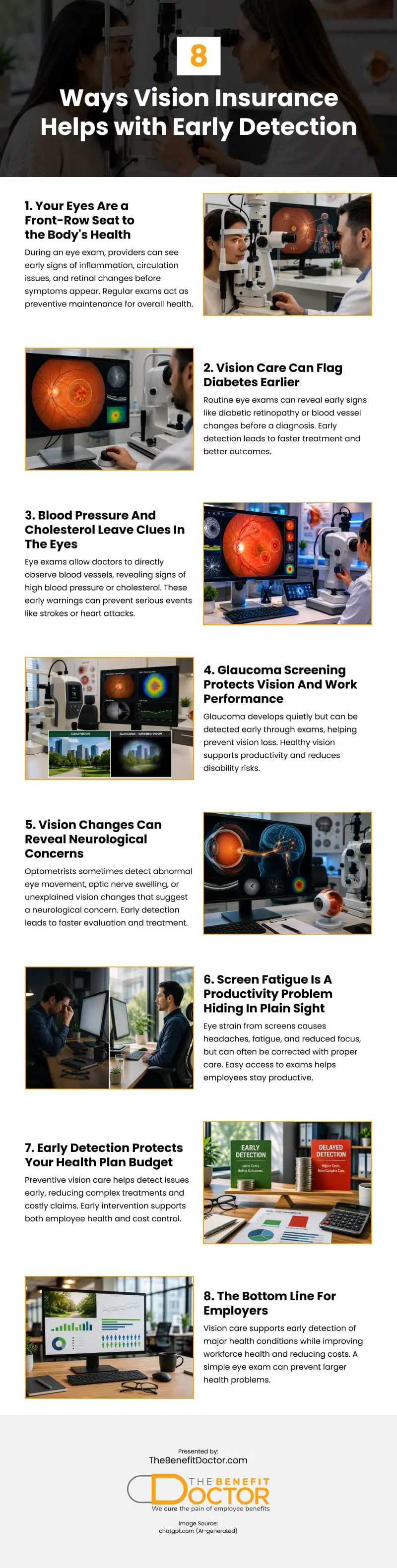
Vision coverage offers more than prescription updates; it’s a preventive health tool that can detect early signs of serious medical conditions. Explore this infographic to see how vision insurance supports early detection and overall wellness.